In January, my principal and I came together to tackle some of the issues that plagued our high school. The following are what we came to agree were the most devastating yet solvable issues:

-
Hunger. Our double orphans come to school hungry. Because they are in school, they neither have the time nor resources to grow their own food. They also don’t have any income in order to purchase food. Therefore, when they do attend school (tuition provided by the government), they are sluggish, inattentive, and unable to perform to dig themselves out of poverty. It is impossible for these students to learn effectively when malnourished.
-
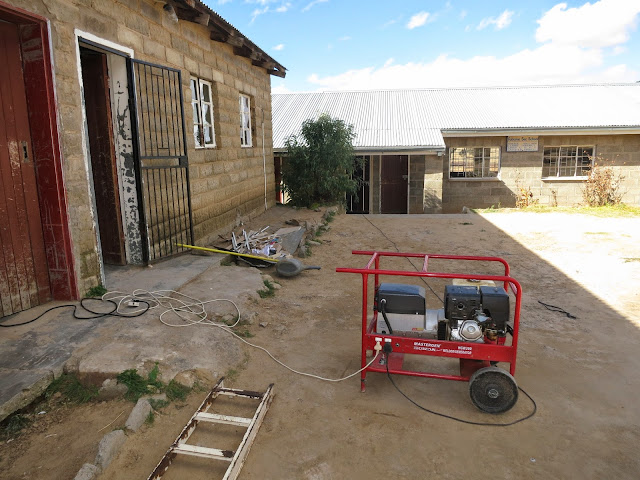
Electricity. Our school is spending excessive amounts of money on petrol for our generator to provide students with scholarly material, quizzes, and exams. The generator provides unregulated current that damages our computer and printers at least once a semester resulting in costly repairs and maintenance. We use the generator to run our school television during fundraisers, but unfortunately with the rising cost of petrol, our profits have been plummeting leading to a continued cancelling of our HIV/AIDS related secondary activities.
-
HIV/AIDS. Fobane High School does not have Life Skills education, which leaves our children more vulnerable to HIV/AIDS and an unprepared adulthood. Our English Club wants to desperately create a Life Skills/English Magazine in order to provide some education on this front. Previous magazines incorporated several important life lessons through grabbing images, and stories, however it had to be sold at such a high cost to the students that only ten were able to afford it. The inability to distribute the information leaves us just as precariously threatened to HIV/AIDS as before.
A free condom distributor now in every shop!
To address the issues we cleverly evoked one material solution that would perpetuate the solving of the others. The idea was to create a sustainable solar panel system that would save money on petrol. Half of the expected savings would then create a breakfast fund to provide nutrition to at least half of the double orphan population. The other half of the savings would be used as emergency maintenance and repairs in the event that the green energy system would falter. Without the need to purchase petrol, the Life Skills Magazine would then be affordable for individual purchase and HIV/AIDS education can be distributed among the masses for invaluable CAPACITOR building.

We applied for a grant through the Peace Corps to generate the funds and purchase a large solar panel system. The project cost roughly $3000 USD and the grant covered about 75%. The system consists of 6 85W panels resulting in 510W of clean electricity stored in 6 105Ah Solar Batteries.

Some RESISTANCE:
As with any project, we have run into a few snags. Right after we bought the system, our printer broke from the unregulated current of our generator (see, major problem). We then purchased a new laser printer/copier, which now consumes power at a higher rating. Our system can still supply enough power, but our inverter is not able to cope with regulating the current need. However, we are underway with getting the new more capable inverter to handle our needs more appropriately. The electricity is CURRENTly (get it?) amazing, quiet, and convenient.

We also did not expect an issue of jealousy to arise. The solar panels are primarily for the office and printing needs, however the teaching staff is requesting additional paneling to provide for cell phones and laptops. The grant money does not, and will not cater to this need, but we are looking for alternatives to alleviate these unwavering pressures to accommodate.
Unexpected Benefits:
While teaching, we all noticed that we didn’t need to yell to teach (as much, I still yell at my students quite a lot). We didn’t realize, but that generator was obnoxiously loud, and at times it did make teaching quite frustrating. The silence has made it much easier to hear the unwarranted screaming of tiny children.
The community has been asking if they can charge there cell phones, to which our administration is considering using this solar system as additional fundraising potential as long as the printer is not being used. At the moment we are unsure whether this money will go to our breakfast fund, but that is what it seems we may be leaning towards.

Future
The project is not completed, but we may be close. We have the major construction portion and budgetary issues finalized, and are tinkering with how we plan on using our savings on petrol to provide our most needy students with regular sustenance. We expect that we can offer breakfast to 20 double orphans starting in two weeks. The literary magazine has its first drafts, and is being edited. In the following weeks I will repost on how we attempt, and hopefully solve our breakfast issues. Just recently I was able to speak to our several shopkeepers (all in Sesotho!) and struck a deal that could make breakfast cheap, efficient, and sustainable for each school week. Wish us luck!
Although we still have our library to finish, this has been the final, biggest project I have had the honor of working with my community on, and it has been difficult, tiring, worthwhile, and enjoyable.

PS. This project was a selfish one. My cousin is visiting, and wants to straighten her hair. How American of her...WATT???


