Showing posts with label 2nd Goal. Show all posts

Friday, August 8, 2014

Theory of 2nd Goal and Thermodynamics

Have you seen the documentary “Dirty Wars?” It discusses how our military presence abroad, and our perhaps immoral or unjust actions rotted the reputation of Americans in several countries. Warring and conflict have left the world scarred with a seemingly reasonable contraction that Americans are a short term, and violent people. We as a nation have evoked an era of distrust and as you travel you will witness the discontent that is generated. Even in places where we are not currently in conflict, people detail their opinions of Americans as power hungry and unnecessarily involved as evidenced by the many discussions I have with my fellow teachers.

While our Nations’ Leaders are focused on National Security, it must be imperative that the mission of the Peace Corps is to divert and alleviate the attention from the militaristic view of the United States, into that of a friendly and helpful neighbor. But my question, and perhaps posed by several people, is that do we as Peace Corps make a difference? Do we change foreign opinion? Do we aid our host countries in ways that they cannot themselves?

Cultural day

As an education volunteer, it is often quite difficult to assess whether I have impact on the developing world. I have come across Bo-’Me on multiple occasions who thank me for my service, and commend me on the wonderful job we have done here, but I am afraid that they will associate me with any progress that occurs in Fobane even if I was not part of the link. For instance, my school produced a top ten student, the highest award possible for a student based on her standardized exams. Additionally, my schools both received over ten boxes of new books to further engage our students’ education. These two improvements in my community are in no way related to me. The student was never taught in my class, and a Minister donated the books. Although I enjoy the praise I reiterate that it isn’t because of me. My village may even have its road paved, which some people have been asking me where I am getting the money.

Local community discussion

I am not saying that I have not had some form of an impact, but I think I have come to the conclusion that even if we are not active volunteers, our presence itself is a contributing factor to development, and it can be accounted for through the lovely science of thermodynamics. Thermodynamics is a branch of physics created to understand the relation between energy and work. I believe it can be extrapolated to the Peace Corps to describe the interactions between energy, work, and the economy of developing nations.
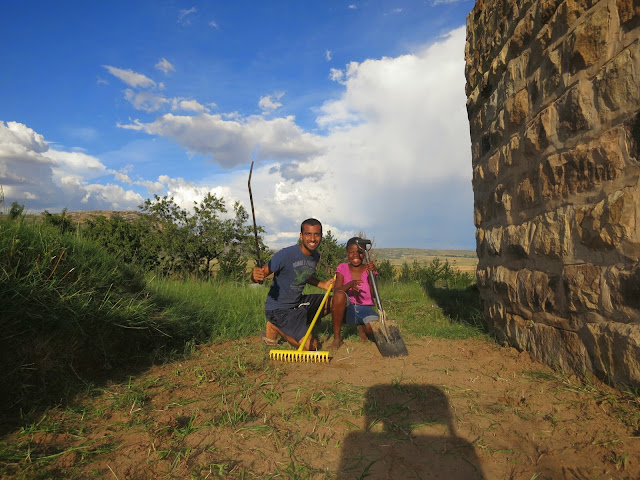
Thermodynamics are about random particle movements, and this post is about random pictures

Take the following system:

An elderly woman needs to carry groceries to her house for 30 minutes uphill. 

I help her with the groceries and consume 200 calories. 

The woman did not use 200 calories and had an easier time to walk uphill. 

I saved the woman 200 calories and accosted myself with this energy debt. 

She no longer requires sustenance to fill the void. 

Energy is neither created nor destroyed, and therefore I do need to fill this void. 

Therefore she saves money on buying food. 

I am forced to buy 200 calories worth of food through my salary. 

The American Government provides my salary.

Therefore, the United States Government infuses money into the community that I am working in through me. My presence implies my local community will save energy, and therefore money.

My shopkeeper where I spend my money

In Lesotho, the Peace Corps sends teachers to rural schools not to replace teachers, but to supplement schools with extra labor force. Therefore teachers attend fewer lectures, saving energy, and therefore saving money. In Summary, villages are able to improve their local economy because of our sacrifice, while the Federal Government sustains us to continually make these sacrifices. As long as we Peace Corps Volunteers do our primary job, the hidden benefits of having a Peace Corps Volunteer may be present. This is different from just throwing money at a problem. By placing a volunteer in a rural area, economic growth (however small) is directed to a specific needy area, and not just given to large organizations or governments that lack the capacity to distribute the wealth appropriately.

The United States Government provides my monthly salary of $200. I spend nearly all of it in Lesotho. Between the nearly 2300 volunteers that have served Lesotho since 1967, the United States investment in Lesotho under the Peace Corps can approximately (and underestimated) be $11 million. This figure does not include staff salary, nor grants allocated to Lesotho. However, many countries the Peace Corps are involved with have a declining economy. In Lesotho, I know it is related to resources being imported by South Africa with little exportation. It also is related to a similar style brain drain, where many of our gifted university graduates find better opportunities in South Africa, therefore providing the government of Lesotho with less through income tax, and a decrease in business investments. I think that the infusion of funds by the hands of volunteers through Peace Corps alleviates some of this economic decline, and without it the situation could be exacerbated.
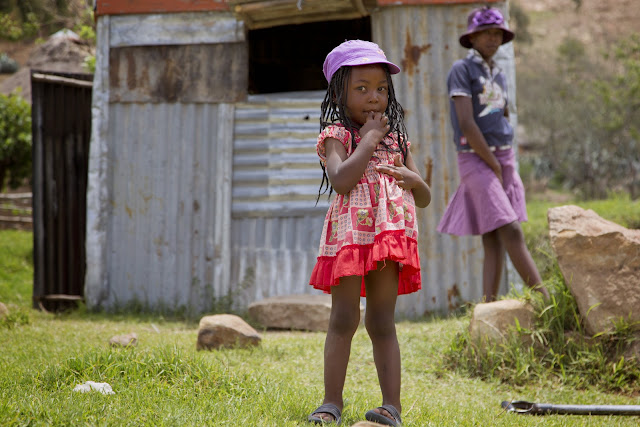
The brain drain can take her from us

Thinking completely objectively, I view myself not necessarily as an entity capable of change, but more an economic tool sent by the government to slowly trickle in capital into a country whose economy is being leeched out to competing sources.

The economic impact that the Peace Corps may provide to its several host countries is in fact hidden to local citizens. But the military actions of the United States are often front page to countries abroad and their perspective remains negatively affected. I am not saying that the military deserves this, but violence (regardless of its necessity) warrants hostility and can devalue the reputation of the United States.

The perceptions on Americans by locals are exactly what the Peace Corps’ 2nd goal was intended for - to promote a better understanding of Americans on the part of the peoples served.


Just as our presence implied directed economic improvement, I am inclined to believe that our presence within rural communities enlightens a perhaps less evident side of Americans, that we promote peace in ways unrelated to violence.

Just by befriending my teachers, having open discussions on religion, world affairs, and cultural ambiguities and differences, we are promoting a friendlier side to the American face. Our impact may be hard to measure, but we know we are doing our job and our nation a service when we are able to walk away from a conversation with a smile and a new friend. 

Tuesday, March 4, 2014

Symbiosis

Although my last post was filled with odd, and intriguing quirks into Basotho Culture, it has to be said that this culture produces some of the nicest, most generous, caring and sharing kind of people. This is something I have indeed adopted myself. It is a simple symbiosis, innately prevalent, allowing us to live and work peacefully together.


Incidentally, I believe the culture of America to be quite different than that of Basotho. Basotho are as perfect as you can get to a truly altruistic society. In the States we believe we are altruistic, but generally when good is done to us we often feel as though we owe something back, or if we do good to someone more often than not we crave something in return or recognition. 

The following examples depict my American opinions on favor-exchange and how Basotho generally don't expect anything in return in certain relationships I have created. 

‘Meighbor

My ‘meighbor (= ‘M’e + neighbor) is always bringing me bread, motoho (porridge), beans, and anything she cooks quite regularly. She does it purely altruistically, to make sure I am fed and happy. Because she offers me goods, I feel obligated to return the favor. Therefore I bring her any cool desserts I make, or cheesy American foods she hasn’t tried. It's an amazing symbiotic relationship we have, yet while she expects nothing, I would feel guilty not offering back. 

When I am running late from town, or it rains my ‘meighbor always takes care of my solar equipment without even asking. She is always looking out for me. Truly another mother. The only thing she ask for is for me to charge her cell phone, which I never deny. 

It is important to realize that being a “white” volunteer in a developing country has some innate rules. Doing an occasional favor can often lead to incessant pestering. Volunteers nowadays find our job more difficult, because missionaries and people of the developed world in the past used to give out so much, that people just expect everything from us. 

The relationship I have built with my 'meighbor is a unique exception, where we both help the other out while her culture doesn't expect anything in return and mine can. 


We also all share line dances together. 

Bana (little children)

On hot days I often run out of water, or it’s too hot to run to the store and buy eggs. Children are always flocking around me (I would too if I were them). I think its because they are bored, and because I am funny looking for them. So I employ them by giving them money to buy my various goods or to fetch my water from a different tap. Then I pay them with limpompong (candy), although they don't expect it. They basically go on little adventures and it is a win-win situation. As mentioned above, it is important to be generous in specific situations such as this. If you just give candy willy-nilly kids multiply like e-coli.

The Stray Dog named Chompy

Because I gave him my edible cat, he now protects me. People here think it is really odd that a dog just chills with me. 


Students

My students usually do their homework, and why is that? Because I promise not to take away their shoes, or make them sit on the floor if they do my work. Maybe this relationship is a bit more parasitic....

Randoms

This may be odd in American culture, but here as soon as you make conversation you are friends. People will get your phone number and just call to talk, they will remember you and pick you up on the street when you are traveling, and ask you very personal questions. The other day some random guy (my friend now) sat next to me on the taxi, took my ear phone, and commented to his friend (not my friend because we didn’t talk at that moment) and asked, “Take a picture with me and my American friend listening to American music.” Well I am his friend right? So I told his friend (not my friend, remember I hadn’t talked to his friend yet) to take my camera and take a photo. I taught her how to do it (now we became friends) and we captured the moment, along with several other blurry moments in a dark taxi. Symbiosis? I say yes because it was entertainment for us all. Just goes to show fun, enjoyable company is only one blunt, ballsy, and odd moment away. 


I wonder how this would fly in the States. 

Sunday, February 9, 2014

Rural Legends


What do you do if something you need is missing, or perhaps misplaced due to your own personal negligence?

Stick out your right hand. Spit in it. Smack the spit pooling in your hand with the index and middle finger of your left hand. Now carefully watch where the spit flies. That is the direction of where your misplaced item is located. Happy Findings!

This is some quick and quirky old Basotho culture that even the Basotho now know to laugh at. I learned about this when hanging out with a few friends in village, and they began to further satisfy my enquiries into the quirky olden rural legends. Just how we Americans never pick up pennies tail side up, Basotho also have their own unique superstitions.


For instance, what if you did something wrong? Maybe you got a C- on your history paper. Or you took your parent’s car without telling them?

According to Basotho rural legend, there is only one foolproof way to avoid the yelling and the beatings. Pluck an eyelash, and throw it into the bush. Then angrily threaten at the bush-eyelash complex, saying things like, “You have been very bad hair on my eye, if I am punished, I will burn the bush in which you reside.” Done and Done.


Hmm, but what if that actually didn’t do the trick. Maybe you do start getting yelled at. Well the next step to at least not get beaten has a bit more basis. When someone is mad at you and yelling, the worst thing to do is to speak back and infuriate the over-reactant. When Basotho women in olden days did something wrong and wanted to avoid getting beaten, they would hold water in their mouth but not swallow. This would ensure that they wouldn’t react to what the man would say, and let him yell out his thoughts until he was tired enough to forget why he was angry.

I think we all enjoy being odd... 


Also the pictures are...quite random. Enjoy. The monkey was from vacation. The girls are from our schools celebration for great test results. And this one...is just my friend and I being really odd over Chinese food. 

Thursday, December 19, 2013

A Year Unfocussed

I have now been in Lesotho for one year and three months with one year remaining left of my service. In this post, I am going to depict what has technically changed.

I have seen two groups of Peace Corps Volunteers go. The CHED 11 and ED 12 have left us. The ED 12 volunteers are the ones who trained us, and basically mentored us through our first year, always giving their interesting perspectives on life in Lesotho. Both groups gave us little tidbits on how to deal with winter, how to hitch from town to town, and most importantly how to open a quart of beer with another quart. It is kind of weird with them gone.

I used to have a cat. Then it got eaten. Its name was Ghost. Now it is a ghost. Now I have a dog. It was the one who ate the cat. I call it Chompy.

I have seen two groups of Peace Corps Volunteers come. The HY 13 and ED 14 have come as fresh faces with all the awe and excitement that we all come into Lesotho in our first year. Everything is new and entertaining. The very first day I was at the ED 14 training, a fellow trainee was elated to see a child riding a donkey and documented the event by camera. It was infectiously energizing to hear all the questions and ideas of their future service. I am really looking forward to getting to know many of them in the following year. I am also excited to finally be among the expert (old) volunteers.


When I give handshakes, I can’t help but do it the Mosotho way. I even hold hands with BoNtate now just because it seems so normal. 

I have completed a full year of teaching. I work at school from 8am-4pm every weekday and therefore accumulated 1520 hours of school time. Each week, I teach 23, 40-minute periods of math or science. Therefore in the 1520 hours I was at school, I have taught 583 hours. My hourly pay for being at school is 17.4 Rand per hour or $1.74 per hour. I have been on school field trips, visited many other schools, given out marked over 1,080 official exams for my four classes. Teaching is an extremely tiring, and rewarding job. I was a new teacher this past year, but now I know how things work and I am more than ready to handle this upcoming school year. The Legend of Sir Shawn lives on.

I have been sick, pretty intensely. I had intestinal bacteria, and essentially died for two weeks. It was partially because I was too stubborn to ask for help, or take medicine. I think if I am ever sick again, I won’t hesitate to call our Peace Corps Medical Office for assistance.

I have become quite excellent at Sesotho. In the beginning I would struggle, and often say absurdly incorrect things like, “I speak Sesotho like a Vagina” instead of “like a baby.” The words are quite similar. But now I feel confident enough to hold conversations with a variety of people on varying levels. Now when I am in taxis and Basotho think of me as the “lehooa” (white person) who doesn’t know Sesotho, I confront them with a witty Sesotho idiom such as, “you eat the wire” which means “you are crazy.” Then ignorant faces become astonished ones, then enthusiastically elated. I now get defensive when someone will ask me, or question if I know Sesotho.


I respond equally and to either Sir Shawn or Tebatso.

I have been through an unimaginable amount of media. I have completed Avatar: The Last Airbender, Avatar: The Legend of Korra, Community, Arrested Development, Death Note, Parks and Recreation, The Office, Once Upon a Time (I regret), Futurama, Heroes, Modern Family, The Mindy Project, Newsroom, The Walking Dead, and True Blood. I cannot mention all the movies I have watched, but there have been plenty. Life with a solar setup is quite grand; I would recommend volunteers to invest in one in their country of service. I am only realizing now that I apparently watch way too many animated shows.

I have travelled to many different locations. My first vacation was in Port Elizabeth with a few Peace Corps friends. I had a competition for the Innovation Challenge in Pretoria. My father and I traveled to Cape Town, Johannesburg, and Kruger National Park. I have been to eight out of the ten districts in Lesotho, which include Mokhotlong, Butha Buthe, Leribe, Berea, Maseru, Mafeteng, Mohale’s Hoek, and Thaba Tseka. I have yet to visit Quthing and Qacha’s Nek. I have even hit up some important spots such as Sani Pass (highest pub in Africa), and Tsehlenyane (triple pool waterfall).


I rarely cooked in the States, and now I am a pretty creative chef. I have made casseroles, wontons and dumplings, samosas, plenty of pasta sauces, breads, cookies, etc. Perhaps I will utilize these skills when I return. This year, I plan on perfecting my newly attained abilities.

I have eaten at every restaurant in Maseru except one. Lancer’s Inn here I come. Reviews are also to come.


Yes, this year has been a very good one.

Sunday, June 16, 2013

Toilet Paper, Lizards, Cosmos, and a Booze Cruise

Story 1:

One day I was at my local shopong, and decided to buy 4 toilet paper rolls, instead of my usual one in awhile. A student sees me, and my purchases and says, “Sir, you eat a lot.”

Story 2:

I had a gigantic episode in my Form B (9th Grade) class. I dislike saying the word hate, but there are many students in their I would like to hire a hitman to do my bidding, also I think I hate them. Half the class are angels, smart happy cute kids who just want high fives and for me to tell them “Good Job!” But the other half, are vile creatures, constantly picking their noses and talking, passing notes and screaming and have ugly mean faces. I tried making them sit on the floor, making them do push ups, stand in the corner, do squats. I tried talking and reasoning with them. This time, I tried disappointment. I was in the middle of class teaching, no one paid attention. I then yelled, and told them that I will no longer be teaching, only writing notes and had a very somber face. I wrote notes as fast as I could, didn’t look one of them in the eye, any question was met with an ignored shoulder. I kept this up for two days. On the third day, another teacher said he needed to punish (beat) the boys in my class for misbehaving. I told him to not worry, I would handle it. I made the boys lie down on the ground (Basotho hate to sit, or even kneel on the floor) and I told them to go to sleep. They were furious. As I continued being a terrible teacher, I saw a lizard climb on one of the boy’s legs. A girl yells “Moholutsoane!” Every boy and girl screamed as loud as they could and ran outside, in the chaos people trampled each other, and the lizard, and all I could do was try to stare and act cold and bitter. I desperately wanted to laugh. After that day, the kids have been very nice, but also 10 of my students got moved to the new class we created to make classes smaller so I’m not sure if my punishments helped them to be better, or the fact that I have mostly only have the good ones left.


Story 3

An Immaculate Debate

Recently we had a school come for debate, they are called Immaculate HS. They have electricity, and a computer lab, and a science lab. There school is quite immaculate. They are a bit better off than us. But we had the debate of the century at Fobane HS. The topic for the older students was Should Lesotho be merged into South Africa, my Fobane students were given the agreeing side, while Immaculate was given the opposing side. Each side was so well prepared (I helped my side of course) and I was judging so I had to be fair (which I was). Left and Right there were interruptions, students yelling, “Point of Correction” and so forth. It was pouring rain, and the tin roofs were making so much noise, adding only intensity to the debate. At one point, a girl on the Immaculate side said, “South Africa’s economy is not as great as you are saying. People there come to Lesotho for jobs. Just look in front of you.” And she points to me. One of my favorite students, Cosmos, stands up and essentially says, “Screw you, He is American!” Everyone freaked out in the hall. That declarative sentence made my living in Fobane just instantly better. Although we lost that debate, I think my school officially won me over. 


Story 4:

Recently, Worker’s day happened (May 1st) and what an amazing holiday that is. It was essentially an excuse for my fellow teachers and I to have a “booze cruise” on the way to Tsehlenyane National Park. Now, normally it would take me only three hours to travel to the park on my own, with slow public transport. Somehow, it took my teachers and I 61⁄2 hours to reach there. We were supposed to leave at 7am, and we left at 9am. Not too bad. We stopped every 10, 20 minutes because my teachers have the tiniest bladders known to mankind when they are drinking. Every time the car stopped, my teachers would leave the vehicle and “Fahla Moholutsoane” which is “blind the lizard” which is the way people say urinate here. After relieving themselves, we would all dance outside the vehicle for a good 5 minutes, I would learn a few Basotho dances, and then the teachers would leave to go buy more beer. I had no idea, that preparing my liver in college was the most appropriate thing to do to prepare for Peace Corps Lesotho, because it is a challenge to keep up with all my friends here. One time we actually drove for 40 minutes straight, but then I heard someone saying, “Shawn o hloka ho hlatsa.” I learned that to “hltatsa” means to vomit, so I quickly said I was fine, but apparently that was an excuse for everyone to again, leave the vehicle to pee and dance. Once we made it to the park, we were forced to pay 30 Maloti to enter. No teacher really wanted to, I didn’t either, but we travelled 6 hours I figured I might as well. I only make about 2000 Maloti here, or about $200 a month, while my teachers make 9000 Maloti a month. Somehow I paid to enter, but a few of them, and my principal escaped the fee and jumped the fence! They said it was too expensive for them to pay, but they bought more beer somehow. An enjoyable, crazy ride. But it was an amazing way for me to bond more with my teachers! 

Wednesday, January 30, 2013

The One Point Five Month Wait

Although the new volunteers and I left Phase I training December 12th, we were off to our individual sites to prepare for school to start on January 14th. Later on we found out that school was delayed and would start nationally in Lesotho on January 28th. This now meant that we had about a 1.5 Month wait period before school started. During this wait time, we took initiative to meet with important members of the community, talk with new people, make friends, look into secondary projects and organizations, and get to know our surroundings and camp towns.
Being a new member of the community, it seemed ritual for people to be very hospitable to me. As soon as someone met me in Fobane for the first time, they bought a large 1.5L Coca-Cola bottle and shared it with me. Basotho really enjoy coke, and expected me to do the same. Just about every other day I would have half of that bottle of coke with whoever bought it to meet me. The soda here is also much more carbonated than back in America (also made with cane sugar rather than high fructose corn syrup so a bit better). Even when I would refuse the soda after the 4th pour into my glass, the person I was meeting would be bewildered as to why I did not want more. Eventually I gave in and drank all the coke I could. I met about ten people who wanted me to drink and talk with them in the first two weeks, amounting to roughly 8L of soda.
Christmas celebrations took place with my Peace Corps American friends, but promptly after I went to a wedding where I was VIP. Both events were discussed in my last blog post, but after I was left with one month of uninterrupted solitude in Fobane with only occasional trips to the camp town. Other than doing my average “get to know my site” activities, I found myself with excessive free time. With this free time I did a variety of things to prevent me succumbing to boredom. Listed below are the memorable events of what took place this past month.

•Got to the Elite 4 in Pokémon Fire Red, I have a Gyrados, Charizard, Hypno, Vileplume, Raichu, and Dragonite.
•Bought a Solar Panel System for my house, 50W and for only 1500 Rand, about $170.
•Planted a Garden with Cantaloupes, Peppers, Cucumbers, Onions, Beets, Sunflowers, Zucchini, and a lot of other stuff, which doesn’t grow.
•Ate bags upon bags of Lychees, about 17 slices of watermelon, and 13 ice cream cones.
•Now have a kitten named Scabbers, it’s awfully dull and won’t stop meowing.
•Have walked to neighboring villages to visit other Peace Corps Volunteers up to 3 hours away.
•Lit Fireworks for New Years
•Started making Bread. Apple Bread, Oatmeal Bread, Carrot Bread, Banana Bread.
•Learned to make spaghetti sauce from scratch, Alfredo and marinara.
•Met a few ‘MaIndia Fellows (what people call Indians here) who are quite kind and offer me great deals and even bootlegged movies!
• Made an enemy with a ‘MaChina Lady, she wants to sell me a part for my solar system for 150 Rand and I am only going for 80 Rand. I am being quite stubborn, yet persistent.
• Watched all of Pirates of the Caribbean, all of the Harry Potter movies, Lord of the Ring series extended addition.
• Before I had my solar, I would run out of power and would listen to movies on my iPad (it broke). I listened to multiple Disney original movies and read the original stories of Cinderella, Snow White, Peter Pan, Pinocchio, etc.
• Read all of Harry Potter on my iPhone.
• Became friends with all but one of the Fobane Taxi drivers, who allow
me to sit up front and save spaces for me to go back home.

Those were the highlights and highpoints of my long break between work. It wasn’t as difficult as a transition as I expected. In college, my schedule was very busy with little to no breaks and it made me happy. Idle moments often seemed wasted. Then Peace Corps training Phase I was even busier than college at times. Coming for a month break to settle into Fobane was previously anticipated to be difficult; to stand still and get used to the calm, quiet, slow village life. But I realized, after a busy training, all I wanted was to relax and enjoy my time. I have exhausted my break to its fullest potential, and I am now thankful that school has officially started (Jan 28th). The first week of school is going pretty great so far! 23 math and science periods, working in a clinic, and fixing up some computers while figuring out clubs, and who to talk to about the possibility of bringing electricity to Fobane (one can dream). Sense of purpose, officially reborn.